
Author: Brandon Holthaus
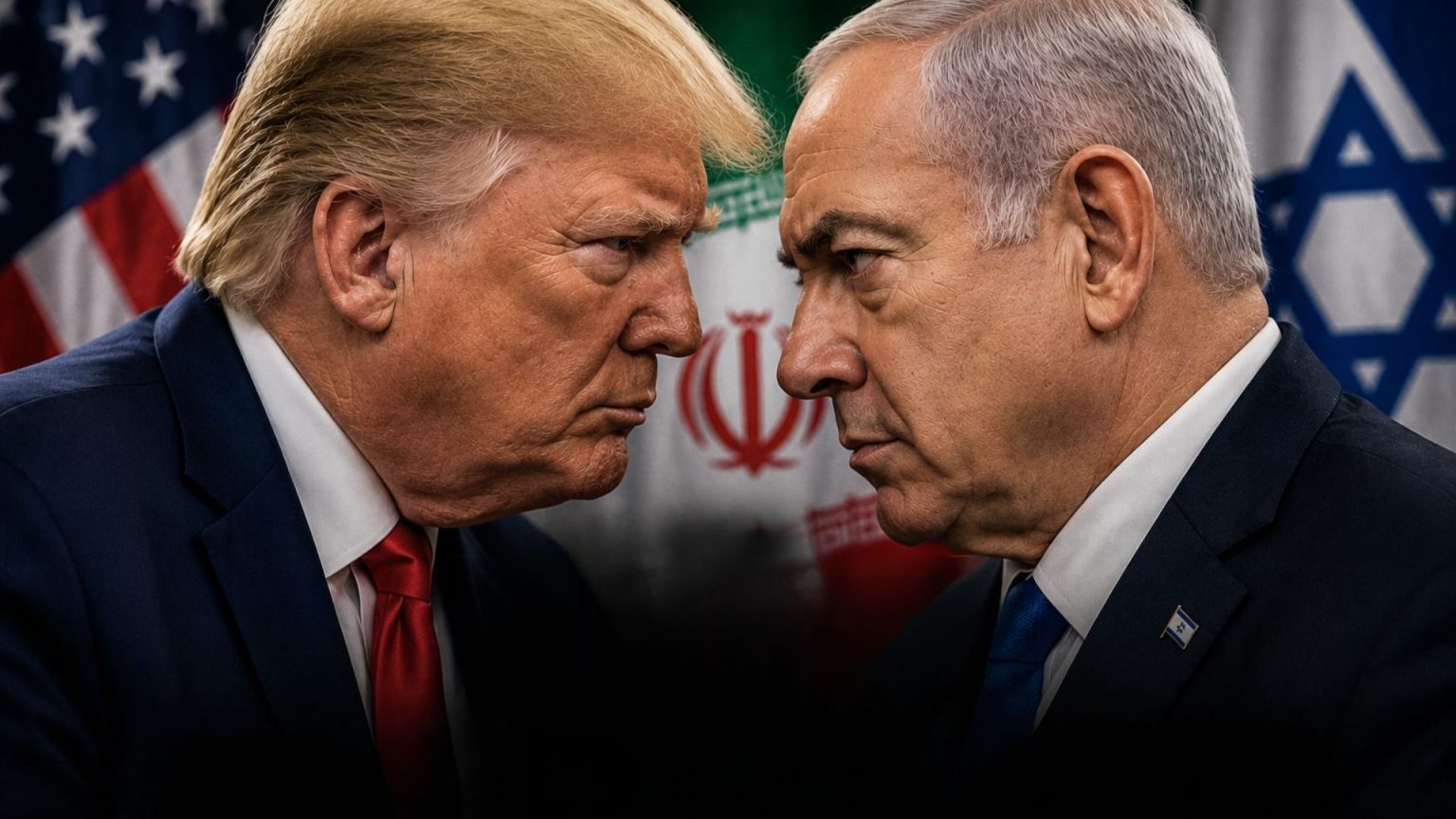
Lately, the tension between President Donald Trump and Israeli Prime Minister Benjamin Netanyahu has become much more obvious. In the past, American presidents and Israeli leaders sometimes disagreed behind closed doors. Now, these disagreements are out in the open, especially about Israel’s right to defend itself from threats by Iran and its allies.
According to multiple reports, Trump warned Netanyahu that Israel could soon find itself standing alone.
“I told Bibi, you’d better be careful what you do, because you could be left alone very soon.”
If you follow Bible prophecy, it’s worth thinking about that statement. Ezekiel 38 and Zechariah 12 mention not just military threats against Israel, but also Israel becoming more isolated from other countries. The world is moving toward a time when Israel may not be able to rely on help from others.
The disagreement reportedly got worse after Iran launched another missile attack on Israel. Trump asked Netanyahu not to respond after the June 7, 2026, missile attacks, warning that more fighting could ruin a nearly finished U.S.-Iran peace deal. Reports say Trump has announced a deal with Iran 38 times, but nothing has been finalized, which is hurting his credibility with the public. This has been embarrassing for the United States. The conversation ended without a clear agreement, and Netanyahu did not say what he would do.
After talking with Israel’s defense leaders, Netanyahu told Secretary of State Marco Rubio that Israel had decided to go ahead with military action against Iranian targets. By the time Washington found out, Israeli aircraft were already on their way.
Trump later stated:
“The Israelis gave us an update at a very late stage. They were already on their way to Iran. I was able to reduce the scale of the attack.”
The President further revealed that five regional countries involved in negotiations with Iran had asked him to pressure Israel to halt its operations and move forward with a diplomatic settlement. Trump stated:
“This morning, the Iranians approached us and said they would no longer carry out an attack on Israel. They asked us to tell Israel to stop attacking. I called Bibi and made him stop.”
Reports surfaced that Trump became furious with Netanyahu during that conversation. According to reports, Trump used unusually harsh language toward the Israeli prime minister and blamed him for jeopardizing broader regional objectives. Trump reportedly said to Bibi, “What the F*** are you doing?” and said to the Prime Minister: “You’re F***ing crazy. You’d be in prison if it weren’t for me. I’m saving your a**. Everybody hates you now. Everybody hates Israel because of this.”
Trump later publicly asserted:
“I call the shots. I call all the shots. He doesn’t call the shots.”
These statements reveal more than just a personal disagreement between Trump and Netanyahu. There is now a clear divide between Trump and Israel, even though Trump has been one of Israel’s strongest supporters among American presidents.
This is a major shift. Instead of urging Israel to respond to threats, Trump now seems more focused on stopping Israel’s military actions to keep talks with Tehran going. This is a problem because it means Israel keeps facing attacks from Hezbollah and Iran and is being told not to retaliate to protect a possible peace deal between Trump and Iran.
Trump repeatedly emphasized that he remains committed to securing a deal with Iran. He told reporters: “We are very close to a final deal with Iran.” He further stated: “I don’t want it to blow up because of what is happening now.” Trump also played down the Iranian attacks in public, saying that Israel had already done enough in response. “Israel has responded enough, no need for more.” He later added: “If Netanyahu strikes them back, it’s just gonna keep going like the last 47 years, or last 3,000 years.”
Netanyahu’s response showed a very different point of view. The Prime Minister insisted that Israel would not allow foreign governments or hostile powers to dictate its security policy. “Israel has the full right to defend itself, and it will use that right as much as needed.” He further stated: “We will not allow Hezbollah to fire at our territory or our communities, and we will act accordingly.”
Israel’s position makes more sense when you look at how often Hezbollah breaks ceasefire agreements.
Since the April 17, 2026, ceasefire:
- More than 220 attack incidents have reportedly occurred.
- Approximately 700 rockets have been launched toward Israel.
- More than 1,000 drones have been launched.
- Israeli officials report over 5,000 rockets, shells, and drones fired since March 2026.
Even after public ceasefire announcements, Hezbollah continued to launch rockets, drones, anti-tank missiles, and mortar attacks against northern Israel. From Israel’s perspective, ceasefires that are often broken by Iranian-backed groups are not real peace deals. Instead, they provide cover for more attacks.
After all this, on Monday, June 8, Iran brought down a U.S. Army Apache helicopter, either by accident or during an air-to-air fight with a suspected drone. U.S. Central Command (CENTCOM) responded with “self-defense strikes” on Iran on Tuesday, June 9, calling them a proportional response to “unjustified Iranian aggression.” This shows the ongoing pattern between Iran and the Trump administration. It shows that the IRGC cannot be trusted or negotiated with, as they are driven by Islamic ideology.
Ongoing talks about Lebanon and Hezbollah have also contributed to this trend of making deals. The United States has supported diplomatic efforts that expect Israel to hold back, trusting promises that Hezbollah will stop its attacks and withdraw. From Israel’s perspective, repeated broken ceasefires show that Hezbollah cannot be trusted and that diplomacy alone cannot stop the Iranian-backed threat on its northern border. This leads many to believe that Israel may have to defend itself alone while Trump tries to make deals with hostile groups.
Israel recognizes the Trump Administration’s push for peace at any cost and the rise of global anti-Israel sentiment. This helps explain why, on June 3, Prime Minister Netanyahu said he wants to change Israel’s relationship with the United States. He wants it to be a true partnership based on equal investment and cooperation, not a parent-child relationship.
Netanyahu no longer wants Israel to rely on U.S. military aid that comes with political conditions or to see the $500 million in yearly aid constantly debated in American politics. Instead, he wants Israel to purchase the military equipment it needs and act as an equal partner, not a dependent one.
Israel also realizes that future American governments may not support it as strongly as before. Public opinion is changing, especially among younger people. A Pew Research Center survey found that 60 percent of American adults now have an unfavorable view of Israel, and most Americans under 50, regardless of politics, view both Israel and its current prime minister negatively. A Quinnipiac University poll last year also found that 60 percent of U.S. voters opposed sending more military aid to Israel.
In my view, this trend has grown because of years of anti-Israel and antisemitic messages on social media, in academia, in mainstream media, and from popular podcasters. All of these have contributed to demonizing Israel.
I also believe there is a deeper spiritual side to all of this. The growing hostility toward Israel matches the new global antisemitism predicted in Scripture. It is helping set the stage for the isolation of the Jewish state that the Bible says will happen in the last days. (Jeremiah 50-51; Joel 3:1-3; Zechariah 12:2-3; Matthew 24:9-10; Revelation 12:1-17)
The main prophetic question is whether we are seeing the beginning of what Ezekiel 38:13 and Zechariah 12:2-3 described thousands of years ago: Israel’s growing isolation among the nations.
Zechariah 12:2–3 describes the world becoming “intoxicated” over Jerusalem and Israel. In other words, nations become irrationally focused on Israel, losing perspective and sound judgment in their opposition to God’s purposes. Israel becomes a “heavy stone” for the nations because they keep trying to reshape or control her to fit their political agendas, only to find they cannot change God’s plan. As a result, they become more hostile and isolate Israel as an enemy of the global community.
This theme of isolation also appears in Ezekiel 38:13, where the Merchants of Tarshish and the young lions only protest Gog’s invasion of Israel. They question and object to the attack, but importantly, they never intervene militarily on Israel’s behalf.
The term “young lions” is understood by many Bible scholars as a Jewish idiom referring to nations that sprang from Tarshish, which is commonly associated with the maritime trading powers of Western Europe, particularly Spain and Great Britain. Under this interpretation, the young lions would include countries such as the United States, Canada, Australia, New Zealand, Mexico, and other nations that emerged from Western European expansion. If this understanding is correct, then America is not absent from biblical prophecy. Rather, as one of the young lions of Tarshish, the United States is present but ultimately chooses not to intervene militarily on Israel’s behalf.
This change does not happen overnight. It begins when allies like the United States start to hold Israel back. It begins when Israel is told not to defend itself. It begins when Israel’s self-defense is seen as a problem for American diplomacy. It begins when Israel is pressured to accept threats that no other country would tolerate.
Whether this is happening on purpose or not, it is a serious trend. The world seems to be moving toward what prophets like Ezekiel and Zechariah described: Israel becoming more isolated and facing more pressure from other countries. At the same time, many nations, including America, are choosing to make peace deals with hostile regimes instead of stopping those that want to destroy both Israel and the West. It’s a troubling trend, but one predicted by scripture. In the end, this leads Israel to a place where they have nowhere to turn but to call out “Hosanna” to Yeshua, our Great God and Savior, for rescue at the Second Coming from the Antichrist and the nations who want to destroy her. (Psalm 79, Psalm 80, Isaiah 63:1-6; Isaiah 64:1-12; Daniel 12:7; Zechariah 14:1-15; Matthew 23:39; Revelation 19:11-21)